Industrial Problems We Commonly See
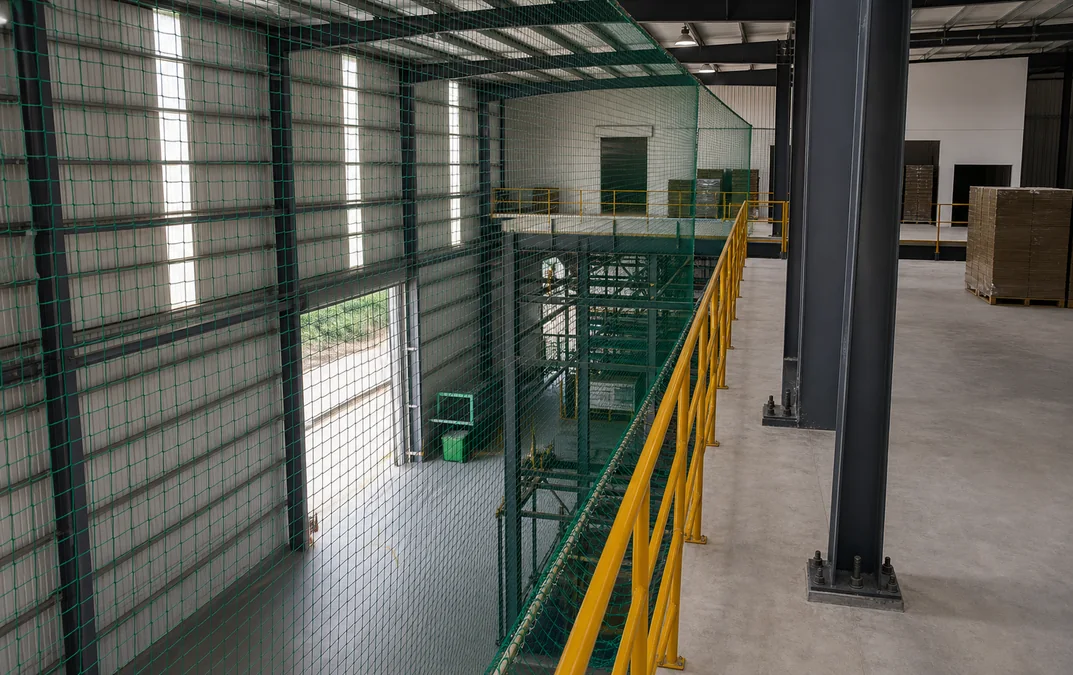
Most industrial customers call when a work area becomes difficult to manage safely. Material is stored near height, tools may fall from a platform, warehouse racks are close to movement areas, workers need a visible boundary near an open edge, or a loading area has side gaps that need practical coverage. Industrial safety nets are useful when the net, rope, anchor and fixing method are selected for the actual site condition.
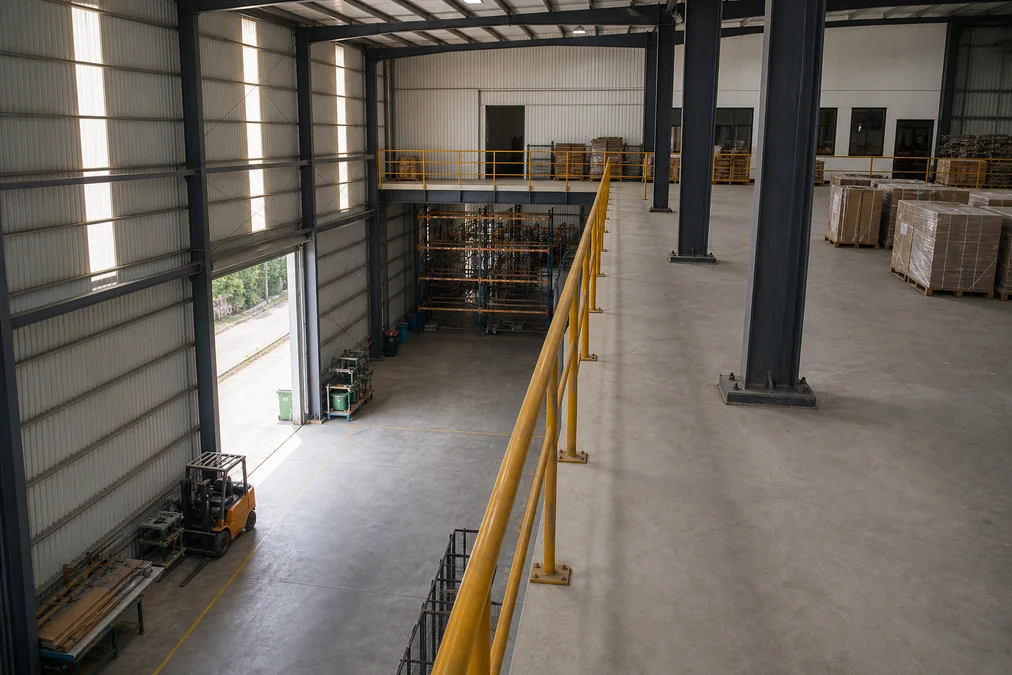
- Open mezzanine edges in warehouses
- Factory sides near material movement zones
- Loading bay gaps and vehicle movement areas
- Machine zones needing controlled separation
- Storage racks near walkways or work areas
- Ducts, shafts and service openings
- Loose material risk near production floors
- Temporary industrial work zones during repair or setup
Need Help With Industrial Safety Nets?
Not sure whether your warehouse or factory needs side coverage, top coverage, rack protection, mezzanine netting or machine-zone separation? Send us a few photos on WhatsApp. We will check the site and guide you with a practical option before inspection.
Where We Install Industrial Safety Nets
Industrial safety net installation is useful wherever material, people, machinery or storage areas need a controlled barrier. We install warehouse safety nets, factory safety nets, mezzanine safety nets, loading bay safety nets and machine area safety nets across Hyderabad. The right design depends on the work process, access route, height, fixing points and whether the net is needed for long-term use or temporary industrial work.
Warehouses and Godowns
Warehouse net installation helps cover open mezzanine sides, rack edges, storage platforms and loose material movement areas.
Factories and Workshops
Factory net installation can be planned around machine zones, service openings, production areas and maintenance access.
Loading Bays and Logistics Areas
Loading bay safety nets help create a visible and practical safety layer near vehicle movement, storage edges and side gaps.
Mezzanine and Platform Edges
Mezzanine safety nets are useful around open-height industrial platforms, storage levels and elevated access points.
Industrial safety nets help reduce risk around open industrial sides, debris-prone areas, loading zones, mezzanine edges and machinery spaces. They should be used along with proper site safety practices, supervision, barricading, PPE and approved industrial safety procedures. Final suitability depends on site condition, fixing strength, material choice and regular inspection.
What Happens During Installation
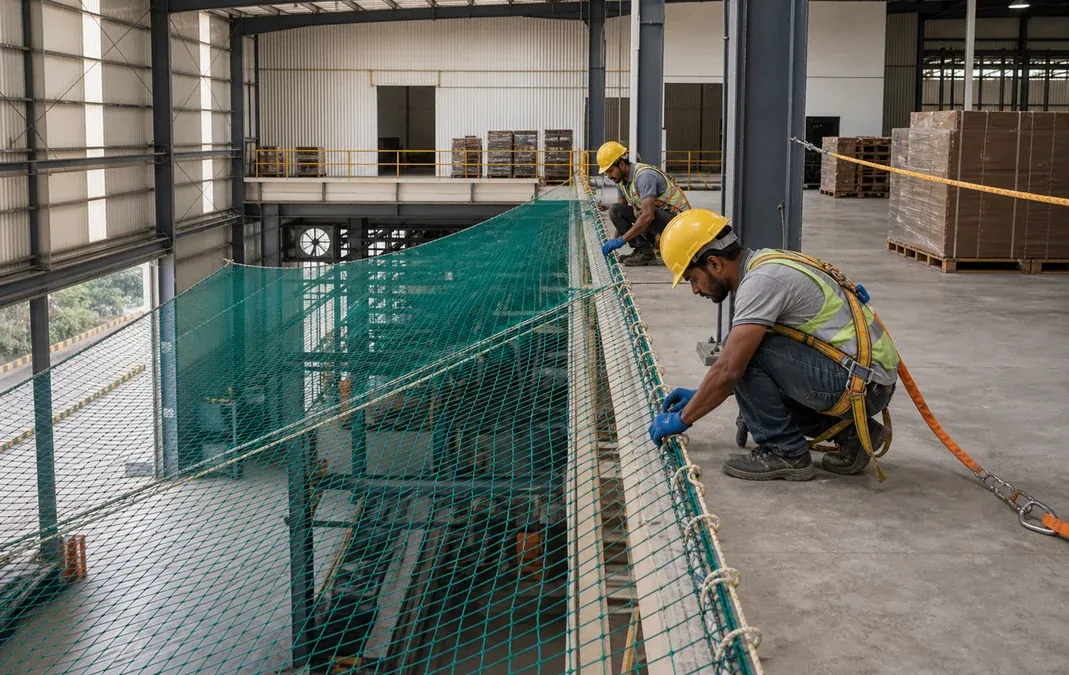
We plan industrial net fixing around the actual work environment. A warehouse mezzanine is different from a loading bay. A machine zone is different from an outdoor industrial shed. Before installation, we check the movement of workers, material, forklifts, trolleys, equipment, doors and maintenance routes so the net does not disturb daily operations unnecessarily.
Our Installation Process
- Share photos, approximate measurements and Hyderabad location.
- We check the warehouse, factory, loading bay, platform or machine-zone condition.
- The net material, rope support, mesh size and fixing method are suggested.
- Price is confirmed based on area, height, access, material and site risk.
- Hooks, anchors, clamps, ropes or support cables are fixed as needed.
- The net is stretched, tied, tensioned and checked section by section.
- Final coverage is reviewed so loose ends, weak corners and movement conflicts are corrected.
How We Choose the Right Industrial Safety Net
For a small machine-side barrier, we may suggest targeted net coverage with strong rope support. For a warehouse mezzanine, loading bay or large factory side, stronger netting, border rope and secure anchoring are usually needed. We check sunlight exposure, heat, dust, airflow, fixing surface, span width, maintenance access and expected site activity before suggesting the net type.
For industrial debris nets, mesh size matters because the net should suit the loose material expected in that area. For temporary industrial safety nets, fixing can be planned around short-term maintenance or repair activity. For long-duration installations, UV-stabilized net, stronger border rope, anchor checking and regular inspection become more important.
| Specification | What we check |
|---|
| Net material | HDPE, nylon or UV-stabilized industrial net based on indoor, outdoor, heat, dust and usage conditions. |
| Mesh size | Selected according to material type, loose parts, airflow, visibility and separation needs. |
| Border rope | Used for edge strength, neat tensioning and better support around larger industrial spans. |
| Fixing method | Hooks, anchors, clamps, rope ties or support cable are selected based on concrete, metal, beam or rack surfaces. |
| Temporary vs long-duration use | Short-term repair areas and permanent warehouse zones need different fixing and maintenance planning. |
| Inspection frequency | Active industrial sites should check nets regularly, especially after material impact, layout changes or heavy activity. |
Industrial Safety Net Price in Hyderabad
Industrial safety net price should be based on actual site measurement. Basic industrial safety net work usually starts after checking the area, height, access and fixing surface. Final rate depends on net type, mesh size, border rope, anchor method, installation difficulty and total coverage area. For a proper estimate, send warehouse or factory photos, approximate measurements and location.
| Factor | How it affects price |
|---|
| Coverage area | Larger warehouse and factory zones need more net, rope and fixing time. |
| Height | Mezzanine edges, tall racks and elevated industrial areas need more access planning. |
| Material strength | Heavy duty safety nets, UV-stabilized nets and stronger border rope cost more than basic netting. |
| Fixing surface | Concrete, metal beams, racks and temporary structures need different hardware. |
| Coverage type | Side coverage, top coverage, rack protection and machine-zone separation use different methods. |
| Site access | Active machinery, tight spaces, height and work schedule can change labour effort. |
Want Exact Pricing?
Send industrial site photos, approximate measurements and location. We will guide you on net type, mesh size, rope support, fixing method and whether the site needs targeted coverage or full industrial netting.
How We Plan Netting Around Active Industrial Work
Industrial spaces are rarely empty when safety net work is requested. A warehouse may have stock movement throughout the day. A factory may have shift timing, machine noise, heat, dust and restricted access. A loading bay may have vehicles moving in and out. Because of this, industrial safety net installation should be planned around the way the site actually works, not only around the measurement of the open area.
Before suggesting the final fixing method, we ask how the area is used during normal working hours. We check whether forklifts, trolleys, pallets, ladders, maintenance teams or material movement pass near the net line. If the net is too low, it may interrupt work. If it is too loose, it may collect dust or touch stored material. If the fixing points are weak, the net may need additional rope, support cable or alternate anchor positions. These details make a big difference in warehouses, factories, workshops and logistics spaces.
For mezzanine edges, the net line is planned so that movement on the upper level remains practical while the open side receives a visible barrier. For loading areas, we check where vehicles reverse, where workers stand and where loose items may drop. For machinery zones, we plan around heat, moving parts, access panels and maintenance routes. For industrial sheds and outdoor factory sides, sunlight, wind and rain exposure matter, so UV-stabilized industrial safety net options and stronger edge support may be suggested.
We also discuss timing. Some industrial net fixing can be done section by section while the rest of the site continues working. In other places, the fixing area must be temporarily cleared because drilling, ladder movement, anchor fixing or net tensioning needs safer access. This is explained before work starts so the site owner, supervisor or maintenance team can plan without confusion.
Industrial Net Planning by Area Type
Different industrial areas need different decisions. A warehouse rack side may need a net that reduces material fall risk without blocking stock visibility. A mezzanine opening may need stronger rope support because the net runs along a higher edge. A machine-side area may need a barrier that keeps separation clear while still allowing maintenance access. A debris-prone repair zone may need temporary netting that can be removed once the work is finished.
For godowns and storage facilities, we look at rack height, aisle width, stored material and how often loading happens. For factories, we check machine clearance, ventilation, heat, dust and staff movement. For commercial back-end areas, we check service openings, ducts, shafts and material movement paths. For logistics units, we check loading bay level difference, vehicle direction and worker access. This helps us avoid a one-size-fits-all approach and suggest industrial net fixing that matches the site.
The best result is usually simple to maintain. The net should be visible, properly tensioned and easy to inspect. Workers should know which area is protected and where the net should not be pulled, cut or used as a storage support. The customer should also know when to call for repair: loose rope, damaged mesh, shifted anchors, rusted hardware, sagging edges or impact marks should be checked early.
Handover and Inspection Guidance
After industrial safety net fixing, we explain the covered area, the main support points and the parts that should be checked during routine maintenance. This is useful for supervisors because industrial spaces change quickly. A new rack, machine shift, extra storage stack or repair activity can change how the net is used. If the site team understands the net line and support points, they can notice small issues before they become bigger maintenance problems.
For active factories and warehouses, we suggest keeping a simple inspection habit. Check net tension, border rope, knots, hooks, anchors and support cable condition at fixed intervals. Also check after heavy loading work, accidental impact, strong wind in open sheds, repair work near the net or changes in storage layout. A safety net is more useful when it is treated as part of the site maintenance routine, not as something installed once and forgotten.
Why Customers Call SJ Invisible Grill
We check the actual industrial use
Every warehouse or factory is different. We check whether the issue is material movement, open height, rack edges, machine zones or loading activity.
We suggest practical coverage
Some sites need full side coverage, but many need targeted netting around the real risk area. We avoid unnecessary coverage where it is not useful.
We focus on neat fixing
The net should not hang loosely, block work routes or interfere with maintenance. We use suitable ropes, anchors, clamps and tensioning.
We explain before starting
We explain fixing points, coverage direction, net height and maintenance access before starting, so the customer knows how the area will be arranged.
Who This Service Is For
WarehousesFactoriesManufacturing unitsWorkshopsGodownsLogistics centresIndustrial shedsStorage facilitiesMaintenance contractorsCommercial buildings
Industrial Safety Nets Across Hyderabad
We provide industrial safety net inspection and installation across Hyderabad, including Tellapur, Gachibowli, Kondapur, Madhapur, Kukatpally, Miyapur, Patancheru, Balanagar, Jeedimetla, Secunderabad, Uppal, LB Nagar, Shamshabad, Kokapet, Nallagandla and nearby industrial areas. We explain the setup clearly so customers can understand the right net type, mesh size, material and fixing method before booking a site visit.
TellapurGachibowliKondapurMadhapurKukatpallyMiyapurPatancheruBalanagarJeedimetlaSecunderabadUppalLB NagarShamshabadKokapetNallagandlaHyderabad
Before You Ask for a Quote
To guide you quickly, share clear photos of the industrial area where the safety net is needed. Include the open side, fixing surface, approximate height, width, nearby machinery, material movement route and any place where loose objects may fall. Also share the site location and tell us whether the work is temporary, long-duration or urgent.
- Site photos from inside and outside
- Approximate width, height and coverage length
- Warehouse, factory, loading bay or mezzanine use
- Fixing surface: concrete, metal, beam, rack or frame
- Need for side coverage, top coverage or separation
- Main issue: open height, material movement or debris risk
Maintenance and Safety Notes
Industrial sites change as storage, machinery and movement paths change. Check the net, ropes, anchors, clamps and support points regularly. After heavy material movement, impact, layout changes, weather exposure or maintenance work, inspect the net for cuts, loose edges and shifted fixing points. Repair small damage early and avoid hanging extra weight on the net.
Industrial safety nets help reduce risk around open industrial sides, material movement zones, loading areas and mezzanine edges, but they are not a replacement for approved industrial safety systems. Use them along with supervision, PPE, barricading, training, housekeeping and site-specific safety procedures.
Related Safety Net Services
Questions Customers Ask
Industrial Safety Nets FAQ
Do you install industrial safety nets in Hyderabad?
Yes. We install industrial safety nets in Hyderabad for warehouses, factories, mezzanine edges, loading bays, machinery zones and open-height work areas based on site access and measurement.
Are industrial safety nets suitable for warehouses and factories?
Yes. They can help reduce risk around warehouse racks, mezzanine sides, factory open edges, machine areas and material handling zones when installed with suitable fixing and site safety practices.
Which material is best for industrial safety nets?
HDPE, nylon and UV-stabilized nets are commonly used. The right option depends on height, span, sunlight exposure, expected activity, mesh size, border rope and fixing surface.
How do you calculate industrial safety net price?
Industrial safety net price depends on area size, height, material, rope support, fixing method, access difficulty and site condition. Share photos, measurements and location for a practical estimate.
Can you install nets without stopping all work?
In many cases, installation can be planned section by section, but the fixing area must be made safe before work starts. Site activity, machinery movement and access are checked before scheduling.
Do industrial safety nets need inspection?
Yes. Nets, ropes, hooks, anchors and support points should be checked regularly, especially after heavy activity, material impact, weather exposure or layout changes.
Do you provide industrial safety nets near me?
Yes. We provide industrial safety net installation across Hyderabad and nearby industrial areas based on schedule, site access and measurement.
Book Industrial Safety Net Installation in Hyderabad
Make your warehouse, factory, mezzanine, loading bay or machine area easier to manage with neatly installed industrial safety nets. Call or WhatsApp SJ Invisible Grill for inspection, material suggestion and price estimate.