Duct and Shaft Protection
Safety net installation for open ducts, utility shafts, building voids and apartment service gaps
If your apartment duct area is open, deep, difficult to clean or risky for children, pets, maintenance workers or loose objects, duct area safety nets can help make that space more controlled. SJ Invisible Grill installs duct area safety nets in Hyderabad for apartments, villas, commercial buildings, schools, hostels, hospitals, offices and renovation sites.
First, we understand where the problem is coming from. After that, we check fixing points, measure the duct opening and suggest only the coverage that is actually needed. The goal is not to cover everything blindly. The goal is to cover the right risk area neatly while keeping practical maintenance access wherever possible.
Why Duct Areas Need Safety Nets
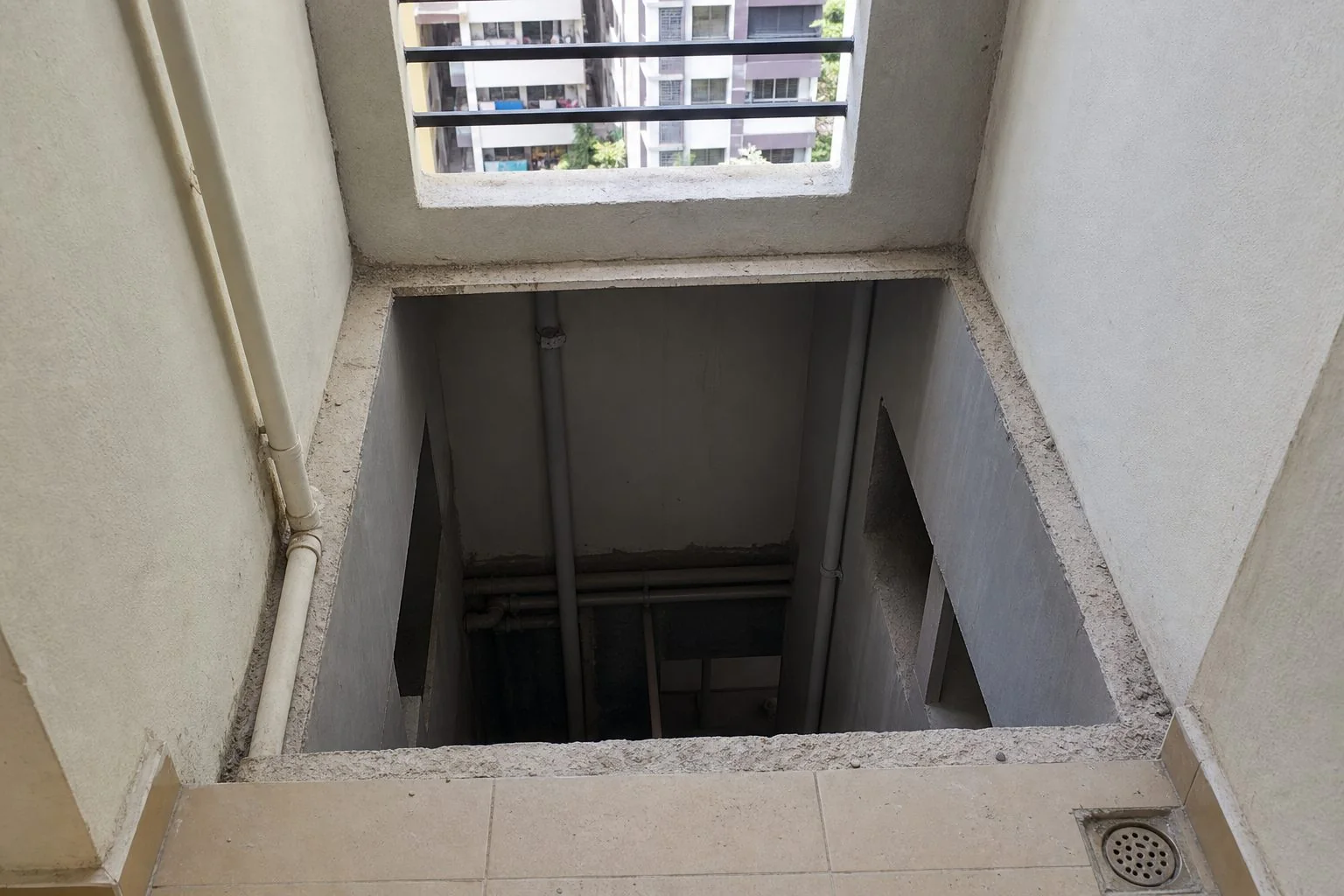
Duct areas are often ignored until a problem becomes repeated. A small item falls into the shaft, birds start sitting in the opening, dry leaves collect below, children lean near an open gap, or maintenance workers find the area uncomfortable to access. In many Hyderabad apartments, duct spaces are used for plumbing lines, AC outdoor unit spaces, exhaust lines, service pipes, drainage access, utility shafts and ventilation gaps. When these areas are open, they can become unsafe and untidy very quickly.
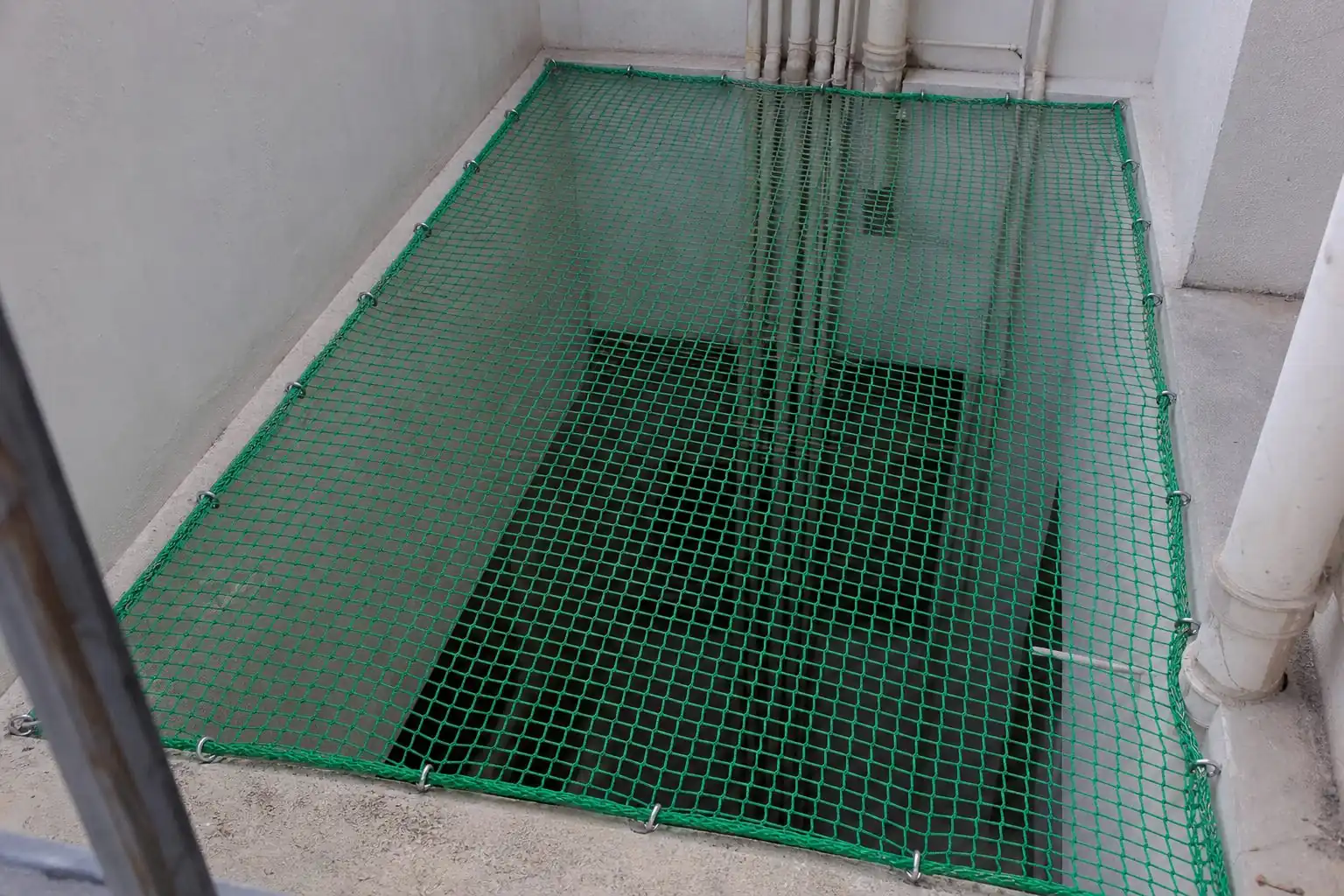
Duct safety nets create a practical barrier across the opening. They can reduce falling-object risk, limit bird entry, reduce dry leaves and debris, and make open duct spaces easier to manage. A well-fitted duct area protection net should be measured correctly, tensioned neatly and fixed to suitable surfaces such as walls, beams, grills, frames or concrete edges. Loose tying or random coverage usually does not solve the real problem for long.
Open Shaft Risk
Open building shafts, utility ducts and service voids can collect dropped objects or create an avoidable risk near homes and common areas.
Bird and Debris Issues
Birds, dry leaves, dust and loose materials can enter uncovered duct openings, especially where the shaft connects to open air or balconies.
Maintenance Practicality
We check pipe access, AC work, plumbing lines and future service needs before suggesting the fixing method and coverage style.
Most customers call us after the same issue happens again and again. Something falls into the duct, birds keep entering the shaft, cleaning becomes difficult, or a family feels uncomfortable with an open gap near a balcony or service area. The right net can make the space feel more manageable without making the building look heavy or messy.
How Customers Describe This Service
Some customers ask for duct area safety nets, while others call the same work duct safety nets, shaft safety nets, open duct safety net, duct covering safety nets, apartment duct safety nets, utility shaft safety nets, building duct safety nets, duct area net installation, duct net fixing, open shaft protection net, balcony duct safety net or safety nets for ducts. In many apartments, the requirement is a mix of child safety, bird control, debris reduction and fall prevention around a service opening.
For homes, the concern is usually an open duct beside a balcony, bathroom ventilation shaft, kitchen utility area, AC service space or inner apartment void. For commercial buildings, the issue may be pipe shafts, service ducts, lift-side voids, HVAC openings or maintenance gaps. The words may change, but the practical need is the same: measure the opening, understand the risk, choose suitable material and fix the net neatly.
Common Customer Situations We Handle
One common call comes from apartment owners who have a duct opening beside the utility balcony. The area may look harmless during the day, but it becomes a concern when children play nearby, when small tools or clothes clips fall into the shaft, or when birds start entering through the same opening. In these cases, the customer usually wants a neat duct area safety net that covers the risk without making the balcony difficult to use.
Another situation comes from residents on higher floors where the duct space runs vertically through the building. A dropped object can travel down the shaft, and cleaning the lower area becomes difficult. A properly tensioned open shaft protection net helps reduce that problem by catching small falling items near the opening. It is also easier to inspect because the net remains visible and accessible.
We also receive calls from building maintenance teams, schools, hostels and commercial properties where pipe shafts or utility gaps need controlled access. These sites may not need decorative work; they need practical duct covering safety nets that are measured correctly, fixed securely and planned around service lines. Before installation, we check whether plumbers, electricians, AC technicians or housekeeping teams may need access later.
Where Duct Area Safety Nets Are Useful
- Apartment duct areas near balconies and utility spaces
- Bathroom, kitchen and plumbing shaft openings
- AC outdoor unit spaces and service ducts
- Open building voids near common areas
- Commercial service shafts and utility passages
- School, hostel and hospital duct openings
- Villa duct gaps, terrace ducts and side shafts
- Renovation sites with temporary open duct areas
What We Check Before Installation
Every duct area is different. Some openings have strong concrete edges, some have painted walls, some have grills, and some have pipes or cables very close to the fixing line. Before suggesting a duct area safety net, we check the opening size, depth, fixing surface, access height, surrounding pipework, sunlight exposure, expected debris and whether the net should be removable or fixed permanently.
This inspection matters because a duct net must stay tensioned without damaging useful service access. If the net blocks a pipe repair, AC service or drainage inspection, it may create a new problem later. Our aim is practical coverage that solves the main risk and still respects the way the building is used.
Before, During and After Installation
Before installation, we look at the duct opening as it is actually used. A duct may have pipes on one side, a drain point nearby, a grill above, a small ledge, or a deep shaft below. We check whether the opening is used for ventilation, plumbing access, AC work or regular cleaning. This helps us decide whether the safety net should be fixed tightly across the top, shaped around pipes, or planned with easier future access.
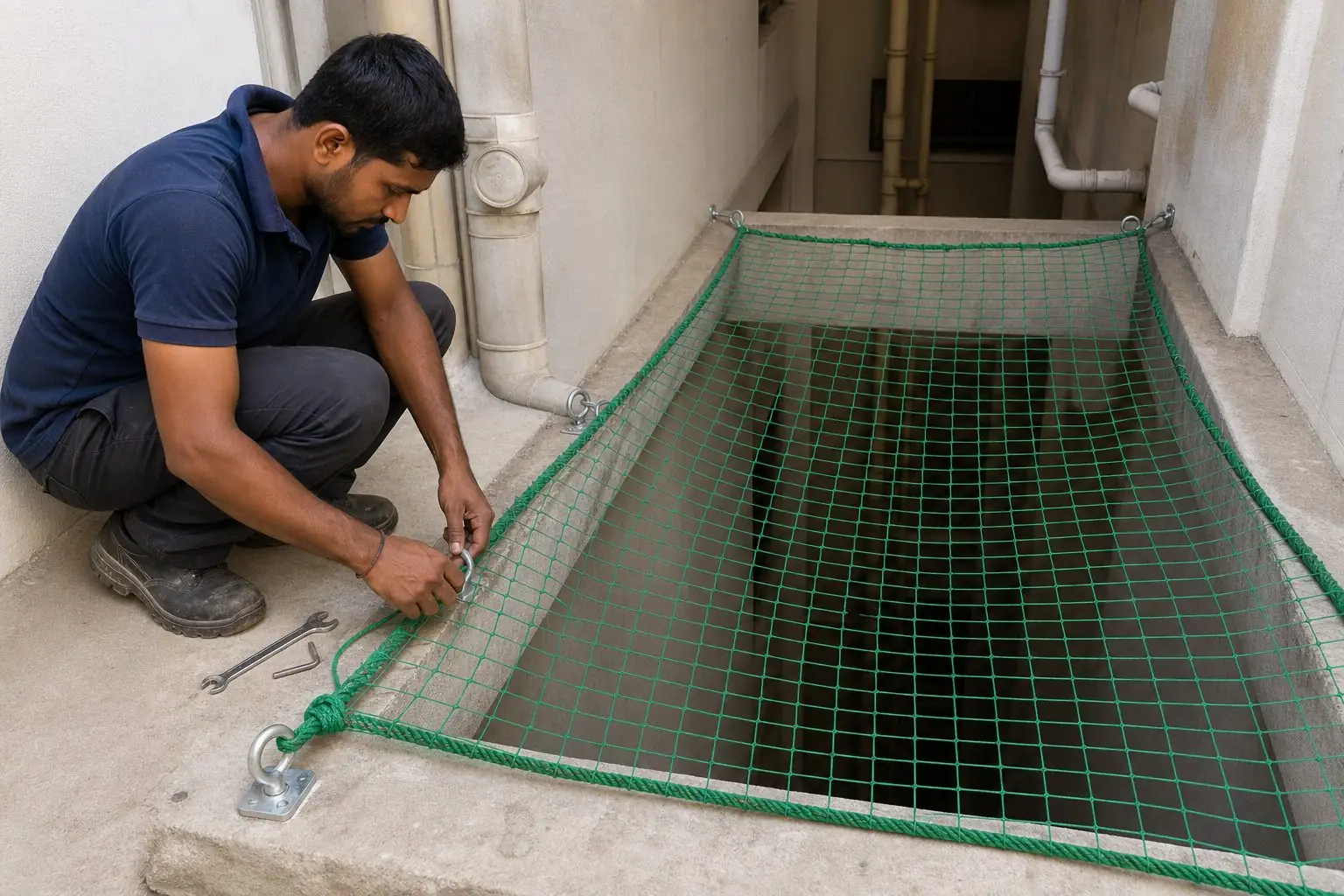
During installation, the important part is not only placing the net. The border rope, hooks, anchors and tie points decide how neatly the duct safety net sits over time. We avoid leaving weak corners or large side gaps because those are the places where debris, birds or loose objects can still pass through. The net is tensioned gradually so it sits cleanly across the duct without pulling awkwardly on one side.
After installation, the final check is done from a practical point of view. We look at the edge finish, visible gaps, rope tension, pipe clearance, water drain areas and maintenance access. If the duct is near a balcony or utility area, the finish should feel calm and usable for daily life, not like a temporary patch. A clean after-installation result is easier for the customer to trust and easier to maintain later.
Material and Fixing Options
| Option |
Useful For |
Why It Matters |
| HDPE Safety Net |
Apartment ducts, open shafts and utility gaps |
Commonly used for practical coverage where strength, flexibility and neat finish are required. |
| Nylon Safety Net |
Custom duct spaces and tighter openings |
Can be useful where the opening shape or fixing requirement needs flexible net handling. |
| UV-Stabilized Net |
Outdoor-facing duct openings |
Better suited for sunlight exposure compared with ordinary material. |
| Border Rope |
Wider spans and clean edge tension |
Helps keep the net aligned and reduces loose edges when fixed correctly. |
| Hooks / Anchors |
Concrete, beam, grill, frame or wall fixing |
The fixing method must suit the actual surface condition and future access requirement. |
Coverage Selection Guide
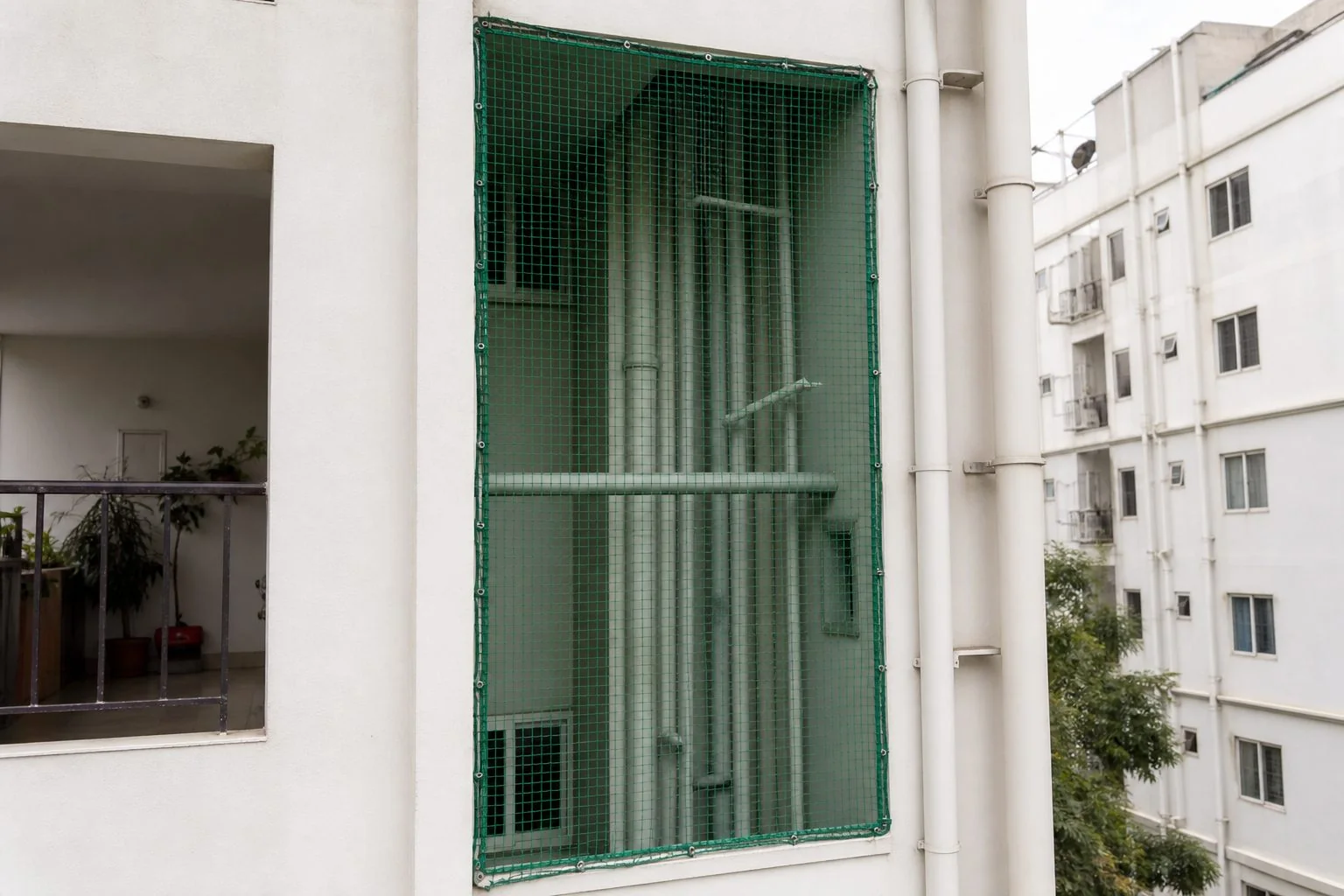
Top coverage is useful when the main concern is an open horizontal duct, shaft or void where objects may fall directly downward. This is common near utility balconies, internal building shafts and service openings. The net is usually measured to sit across the opening with enough border support so the edge does not sag quickly.
Side coverage is useful when birds, leaves or debris enter from a vertical gap, side opening or grill line. Some duct areas need both top and side coverage because the problem comes from more than one direction. In those cases, we explain the difference clearly so the customer understands why one net may not solve every issue.
Custom coverage is useful when the duct has pipes, bends, AC lines, drain points or uneven edges. Instead of forcing a standard rectangle, the net can be planned around the actual shape. This is especially important in older buildings, renovated flats and commercial utility shafts where the duct opening may not be symmetrical.
Installation Process
- Share duct photos, location and rough measurements on WhatsApp.
- We check the duct opening, depth, pipework, side gaps and fixing surfaces.
- Material, mesh and rope support are suggested based on risk and exposure.
- Final price is confirmed after measurement, access and fixing method are clear.
- Hooks, anchors or tie points are fixed carefully around the duct opening.
- The net is tensioned, edges are secured and the finish is checked.
Duct Safety Nets for Apartments, Villas and Commercial Buildings
In apartments, duct area safety nets are often requested for utility balconies, bathroom shafts, kitchen ventilation spaces, service ducts and common building voids. The customer usually wants the work to be neat because the duct may be visible from the home. We keep the appearance simple and practical, using the required net, rope and fixing points without turning the area into a heavy structure.
In villas and independent houses, duct safety nets may be needed near terrace ducts, side ventilation gaps, plumbing shafts or open service spaces. These areas can be exposed to sunlight, rain and dust, so material selection and edge tension matter. UV-stabilized safety net material may be suggested when the opening faces outdoor exposure.
In commercial buildings, schools, hospitals, hostels and offices, the focus is often maintenance and controlled access. A duct net may need to work around pipes, exhaust lines or utility routes. We check the way the space is used before fixing because the wrong installation can make future service work difficult.
Outside Vertical Duct Safety Nets
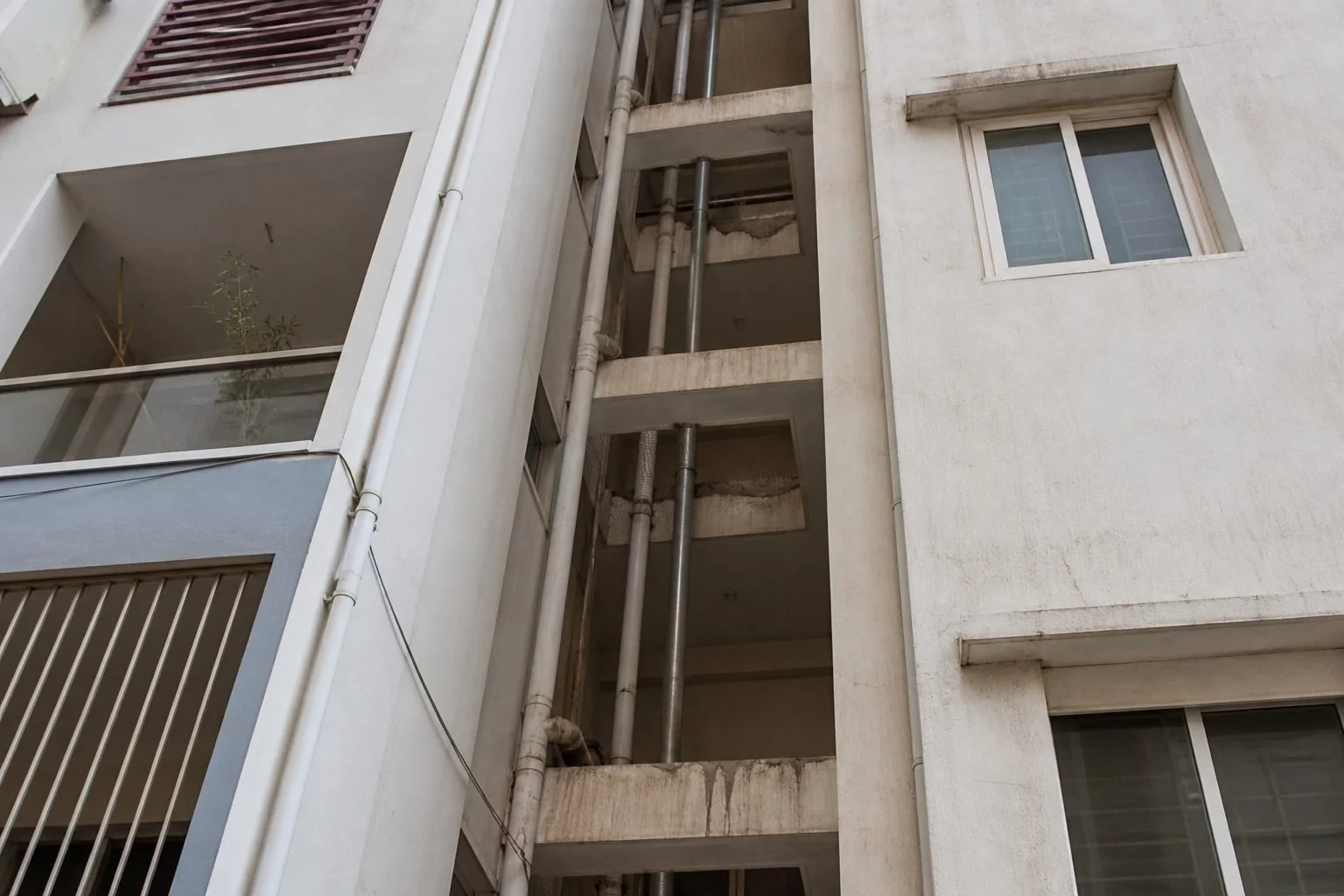
Some duct areas are not only horizontal openings inside a balcony. Many Hyderabad apartments also have outside vertical duct shafts where plumbing pipes, drain lines, AC service routes or ventilation gaps run along the building exterior. These vertical spaces can allow birds, leaves, dust and small debris to enter from the outside. They can also look exposed when viewed from balconies, service passages or neighboring flats.
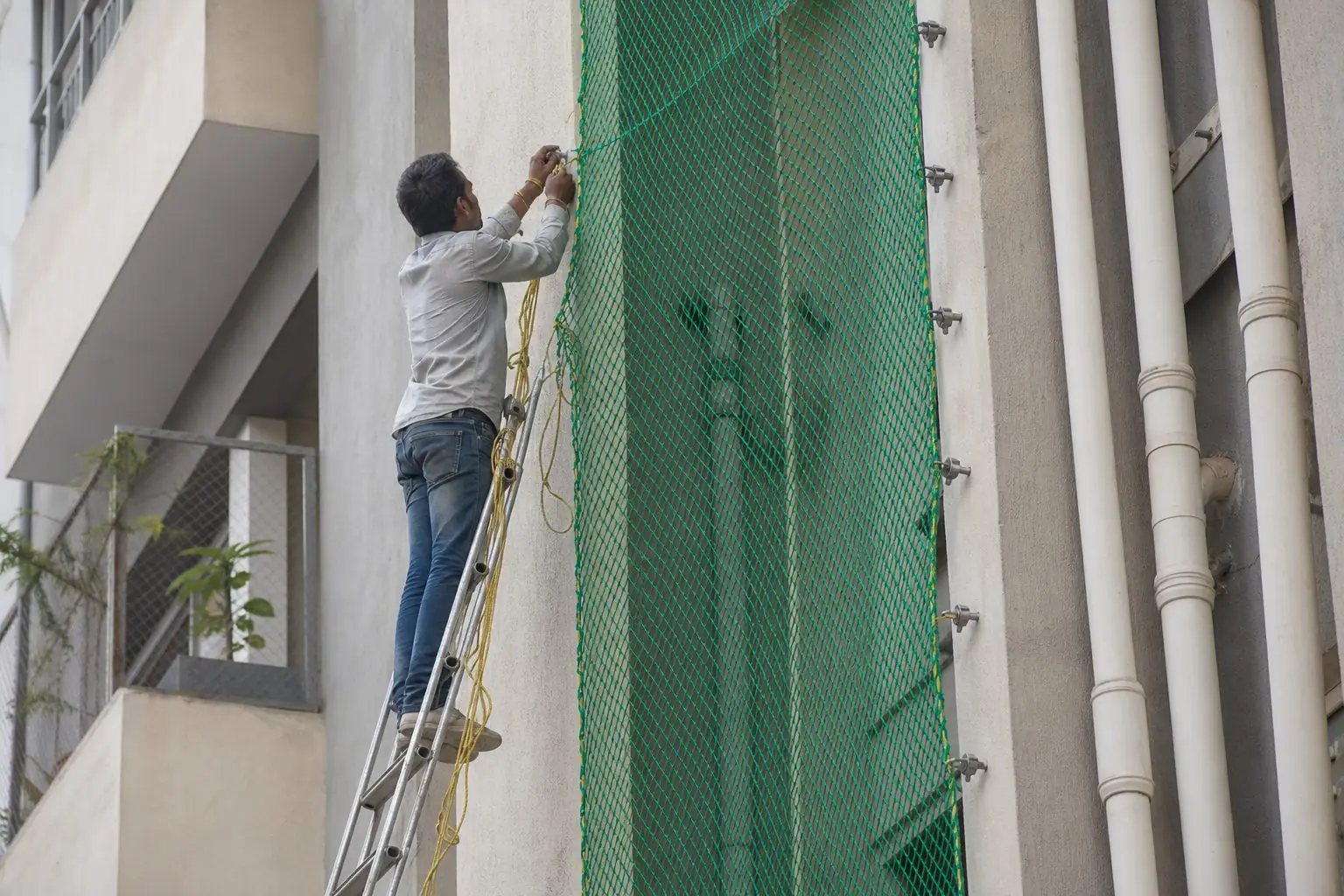
For outside vertical duct safety nets, the fixing method is different from a simple top-cover net. The net must be tensioned along a wall or shaft face, with hooks or anchors placed carefully so the mesh stays aligned from top to bottom. We check pipe clearance, wall strength, balcony access, service access and the height of the work before suggesting the coverage.
The aim is clean outside duct protection, not a rough patch. When the vertical duct net is fitted neatly, it reduces open gaps while still keeping the service shaft visible for inspection. This is useful for apartment pipe shafts, exterior utility ducts, service balconies, open vertical voids, commercial building duct faces and areas where bird entry or debris movement keeps repeating.
Outside Vertical Duct Net Images
Price Factors for Duct Area Safety Nets
| Factor |
How It Affects Price |
| Duct size |
Larger openings need more net material, rope and fixing points. |
| Height and access |
Higher or difficult-to-reach ducts take more time and careful handling. |
| Material type |
HDPE, nylon and UV-stabilized materials have different usage and cost. |
| Fixing surface |
Concrete, metal, grill, beam and wall fixing may need different hardware. |
| Maintenance access |
Some sites need practical removable access or careful planning around pipes and AC lines. |
What to Send for a Quick Estimate
Send clear photos of the duct area, approximate width and length, floor level, location in Hyderabad and the main issue you want to solve. If pipes, AC lines, grills or service access points are visible, include those in the photo. This helps us guide you with the likely coverage type before inspection.
What Makes a Duct Net Installation Neat
A neat duct safety net installation is easy to recognize. The net is not hanging loosely, the border rope follows the opening, the corners are supported, and the fixing points look intentional. The mesh should cover the risk area without large gaps at the edges. Where pipes pass through or near the duct, the net should be shaped carefully so it does not press unnecessarily against service lines.
Clean finishing is especially important in Hyderabad apartments where duct areas are often close to daily-use spaces. A utility balcony, laundry area or kitchen-side duct should remain comfortable to use after installation. The net should reduce the worry of falling objects or open shaft exposure while keeping the area visually simple.
We also check whether water, dust or leaves may collect on the net. If a site has drainage nearby, the coverage needs to be planned so normal cleaning remains possible. A safety net is most useful when it solves the main problem and does not create avoidable maintenance trouble.
Why Customers Call SJ Invisible Grill
Site-based measurement before final suggestion
Neat fixing for apartment and building duct spaces
Guidance based on photos and practical access
Material suggestion based on exposure and use
Support for homes, apartments and commercial buildings
Call and WhatsApp support for Hyderabad customers
What We Try to Avoid
We avoid loose tying, unnecessary coverage, weak edge support, blocking important service access, and suggesting the same fixing method for every duct. We also avoid strong claims like complete protection because every duct area depends on material, fixing points, maintenance and site condition.
Maintenance Note
Check the net after heavy wind, rain, painting work, plumbing repair, AC service or any impact. If dust, leaves or debris collect on the net, clear them safely. If hooks, rope or mesh loosen, get them checked early.
Helpful Maintenance Tips
After duct area net installation, inspect the net occasionally from a safe position. Look for loose hooks, frayed rope, cut mesh, heavy dust collection, paint damage or any section that has shifted. If plumbing, AC, electrical or renovation work happens near the duct, ask the workers not to cut or untie the net without planning how it will be fixed back.
Do not allow heavy storage, sharp tools or construction materials to rest on the net. Duct nets are meant to reduce risk around openings and catch light falling items, not to work as a platform or load-bearing walking surface. If debris collects, clear it safely so the net does not remain under unnecessary weight.
If the duct opening faces outdoor weather, check the net after heavy rain, strong wind or long sunlight exposure. Early maintenance is easier than waiting until a corner loosens or the mesh is damaged. If you are unsure, send a photo on WhatsApp and we can guide whether repair or replacement is needed.
Hyderabad Areas We Serve
Tellapur
Nallagandla
Gachibowli
Kondapur
Madhapur
Hitech City
Kukatpally
Miyapur
Nizampet
Kokapet
Financial District
Manikonda
Banjara Hills
Jubilee Hills
Attapur
LB Nagar
Uppal
Secunderabad
Warranty, Support and Safety Disclaimer
Duct area safety nets are a practical safety and protection layer, but they do not replace adult supervision, proper building maintenance, approved construction safety practices or careful handling around open shafts. Net performance depends on material condition, fixing strength, rope support, exposure, maintenance and the way the duct area is used. We guide customers with suitable material and fixing after checking the site condition.
Duct Area Safety Nets FAQ
Common Questions About Duct Safety Net Installation
Are duct area safety nets useful for apartments?
Yes. Duct area safety nets are useful for apartment shafts, utility ducts, open service gaps, balcony duct openings and common building voids. They help reduce the risk of objects falling into the duct and can make the area safer when fixed properly.
Can duct safety nets stop bird entry and falling debris?
They can reduce bird entry, dry leaves, loose debris and small falling objects when the mesh and coverage are chosen correctly. The final result depends on the duct size, side gaps, exposure and fixing method.
Which material is used for duct area safety nets?
HDPE, nylon and UV-stabilized nets are commonly used. The suitable material depends on sunlight exposure, duct size, expected load, mesh requirement, border rope and available fixing points.
How do you calculate duct area safety net price?
Price depends on duct size, height, material, mesh type, rope support, fixing surface, access difficulty and whether the net needs top coverage, side coverage or custom shaping. Photos and approximate measurements help with initial guidance.
Can installation be done without blocking maintenance access?
In many sites, yes. We check whether pipes, AC lines, plumbing, exhaust ducts or utility access points need future maintenance and then suggest a practical fixing method.
Do you install duct area safety nets near me in Hyderabad?
Yes. SJ Invisible Grill provides duct area safety net inspection and installation across Hyderabad and nearby areas based on location, site access and schedule.
What details should I send for a quick quote?
Send clear duct photos, approximate width and length, floor level, Hyderabad location, fixing surface details and the main issue such as child safety, debris, bird entry, open shaft risk or maintenance access.
Related Safety Net Services
If the same property has other open or exposed areas, these services may also be useful after inspection.
Need Duct Area Safety Nets in Hyderabad?
Share your duct photos, approximate measurements and location. We will check the opening, understand the risk and guide you with practical coverage, material and fixing options.