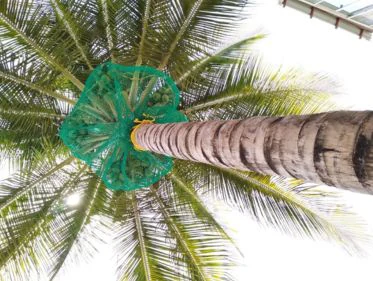
Coconut Tree Net Installation for Safer Outdoor Areas
If a coconut tree is close to your parking area, balcony side, garden, walkway, compound wall or building entrance, falling coconuts and dry fronds can become a repeated worry. SJ Invisible Grill installs coconut tree safety nets in Hyderabad for villas, apartments, gated communities, schools, resorts, farmhouses and commercial compounds.
First, we understand where the risk is coming from. After that, we check the tree height, coconut bunch position, crown spread, nearby buildings, vehicle movement and possible support points. The goal is not to cover the tree blindly. The goal is to reduce the practical fall zone with a neat net, suitable material and sensible rope support.
Need Help With Coconut Tree Safety Nets?
Not sure whether your tree needs crown netting, falling fruit netting or a wider ground-side coverage plan? Send us a few photos on WhatsApp. We will check the tree position, risk area and access before guiding you with the right option.
Problems We Commonly See Near Coconut Trees
- Coconuts falling near parked cars, two-wheelers or entry gates
- Dry fronds dropping into gardens, walkways or compound areas
- Residents avoiding parking below the tree during windy days
- Coconut bunches hanging above a roof, balcony side or wall edge
- Schools, hostels or resorts worried about outdoor movement below trees
- Old trees with hard-to-reach coconut bunches near daily-use areas
- Apartment associations receiving repeated safety complaints
- Farmhouses and villas needing practical protection without removing the tree
Most customers call us after the same issue keeps repeating: a coconut falls near a car, a dry frond drops close to a walkway, or residents feel uncomfortable using the area below the tree. A net may look simple, but when it is fitted in the right place with proper support, the outdoor area becomes easier to use with more confidence.
How People Usually Ask for This Service
People use different words for the same problem. Some ask for coconut tree safety nets in Hyderabad because a tree stands near their building or parking space. Some ask for coconut safety net near me, coconut tree net installation, falling coconut safety net or coconut protection net because they want a practical way to reduce risk without cutting the tree.
For villas and apartments, the need is often coconut tree safety net for parking, apartment coconut tree safety net, coconut tree safety net for villa or coconut tree safety net for garden. For larger properties, customers may ask for farmhouse coconut safety net, resort coconut safety net, compound coconut tree safety net or palm tree safety net around outdoor movement areas.
Material questions also come up often: green HDPE coconut net, nylon coconut tree net, UV-stabilized coconut safety net, coconut bunch safety net, coconut tree canopy netting, coconut net with rope support and falling fruit protection net. We treat all of these as one practical question: where can the coconut or frond fall, and how can that area be covered neatly?
When You Should Consider Coconut Tree Safety Nets Urgently
You should consider coconut tree safety nets quickly if coconuts have already fallen near vehicles, people walk below the tree every day, children play in the garden area, a coconut bunch is hanging above a balcony or roof edge, or residents are avoiding a parking slot because of the tree. Strong wind, old dry fronds and heavy bunches can make the problem feel more serious, especially in compounds where the same route is used every morning and evening.
Some owners wait until pruning is scheduled, but daily movement below the tree continues. In those cases, a properly planned coconut tree net fixing can reduce the practical risk area while still allowing regular tree care later. The right decision depends on the tree condition, the fall direction, the height and whether there are clear support points around the tree.
Where We Install Coconut Safety Nets
We install coconut tree safety nets for villas, apartment compounds, gated communities, independent houses, schools, colleges, hospitals, farmhouses, resorts, office campuses, commercial buildings and outdoor parking areas. Each site needs a different approach because tree shape, crown spread and nearby structures change the fixing method.
A tree near parking needs attention to vehicle movement and rope positioning. A tree near a walkway needs a neat fall-zone plan. A tree near a roof or balcony needs careful coverage so the net does not create a new maintenance issue. A tree in a garden may need wider side support if people sit or walk below it regularly.
Why Coconut Trees Need a Physical Safety Layer
Warning boards, CCTV and security guards can alert people, but they do not stop a falling coconut. Regular harvesting and pruning are useful, but coconuts can still mature between visits and dry fronds can loosen in strong wind. A properly placed net creates a physical layer below or around the target fall area.
The net is not a replacement for tree care. It works best when the tree is inspected, loose items are managed, and the net is checked occasionally. The right result comes from using suitable material, rope support and fixing points for that particular tree.
Coconut Safety Nets vs Other Options
| Option |
What it does |
Limitation |
| Regular harvesting |
Removes mature coconuts from time to time. |
Does not cover risk between visits or during sudden shedding. |
| Tree pruning |
Reduces some dry fronds and unwanted growth. |
Does not stop coconuts that fall later. |
| Warning boards |
Reminds people not to stand or park below the tree. |
People may still pass through the area every day. |
| Safety net |
Creates a physical catching or deflection layer around the risk area. |
Needs proper fixing, maintenance and realistic load planning. |
Tree and Site Check
We check tree height, crown spread, coconut bunch position, nearby walls, roofs, parked vehicles and walking routes before suggesting coverage.
Material Suggestion
We suggest HDPE, nylon or UV-stabilized net options based on sunlight exposure, expected fall load and how the support rope can be fixed.
Neat Rope Support
The net is tied and tensioned around the practical risk area so it can reduce falling coconut problems without blocking daily movement unnecessarily.
Coconut Tree Safety Net Materials
| Material |
Best for |
| Green HDPE safety net |
Regular coconut tree protection in villas, apartments, gardens and parking areas. |
| Nylon safety net |
Flexible coverage where stronger holding and rope support are needed. |
| UV-stabilized net |
Outdoor trees exposed to direct sunlight and changing weather. |
| Border rope |
Improves edge strength and helps hold the net shape around the crown or fall zone. |
| Support rope or cable |
Useful when the net needs wider span support near walls, poles or nearby structures. |
| Tie points or anchors |
Used based on available surfaces such as walls, poles, compound structures or tree-safe support points. |
How Material Choice Changes the Result
A coconut tree safety net faces sunlight, wind movement, leaf rubbing and possible load from coconuts or fronds. That is why material choice matters. A light net may look neat, but it may not suit a tree with heavy bunches or wide spread. A stronger net may need better rope support and clearer fixing points.
We do not suggest the same material for every site. We check the actual tree and the area below it before recommending green HDPE coconut net, nylon coconut tree net, UV-stabilized coconut safety net, border rope and support method. The right net is the one that suits the risk, not the one that only looks heavy.
How We Decide the Right Coverage Type
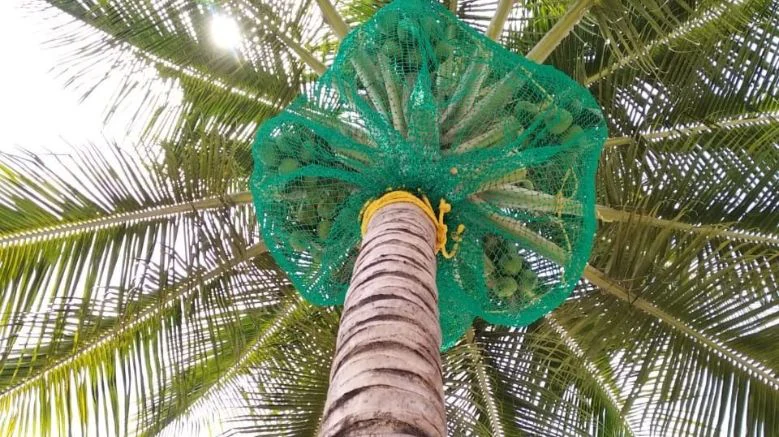
Crown-side netting is useful when coconut bunches are grouped near the top and the main concern is falling fruit. Wider canopy netting is useful when the crown spread is broad or coconuts can fall toward different sides. A targeted falling coconut safety net may work when the risk is mainly over one parking slot, pathway or roof corner.
For some trees, support can be planned around nearby walls, poles or compound structures. For other trees, the support must stay closer to the trunk and crown because the surroundings do not allow wide fixing. We explain the practical option before starting, so you understand what the net can cover and what still needs maintenance.
What We Try to Avoid
We avoid loose netting that hangs without support, tying methods that can slip quickly, coverage that blocks regular movement below the tree, and unnecessary drilling where another support method is more practical. We also avoid making promises like total protection because outdoor tree work depends on wind, tree health, bunch weight and maintenance.
A good coconut tree safety net should look planned. It should have clear support, visible tension and a sensible fall-zone shape. It should also be easy to inspect later because collected coconuts, dry fronds and rope tension may need attention after weather changes.
Installation Process
- Share coconut tree photos or request a site visit
- Check falling coconut, dry frond and parking or walkway risk
- Measure tree height, crown spread and possible support points
- Suggest suitable net material, mesh and rope support
- Confirm price after access and fixing method are clear
- Fix rope support, tie points or anchors where suitable
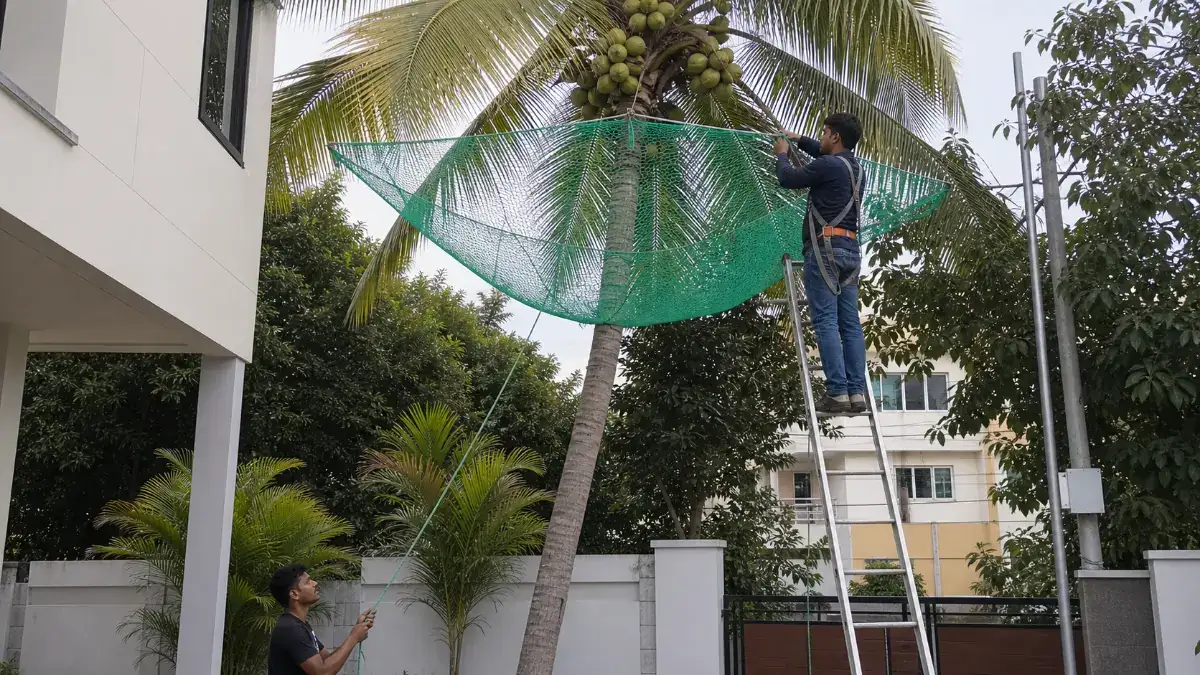
- Fit and tension the coconut tree safety net around the fall zone
- Check final finish, side gaps, loose rope and site access
What Happens During Installation
This stage is planned only for coconut tree safety net work. The team checks the risk area below the tree, keeps the ground clear, identifies support points and installs the net around the practical coconut fall zone. If the site has parking movement, building edges or a walkway below the tree, those points are considered before the net is tied.
Want Exact Pricing?
Send tree photos, coconut bunch close-ups, approximate height, the area below the tree and your Hyderabad location. We will guide you with likely material, coverage and inspection requirement.
Coconut Tree Safety Net Price Factors
| Factor |
How it affects price |
| Tree height |
Taller trees need more access care, labor time and safer installation planning. |
| Crown spread |
Wide crowns need more net area, rope support and edge fixing. |
| Coconut bunch position |
Bunches at different sides may need wider or angled coverage. |
| Material |
UV-stabilized and stronger nets cost more than basic netting. |
| Support points |
Walls, poles, compound structures and tree-safe tie points change the fixing method. |
| Access difficulty |
Tight compounds, nearby wires, roof edges or parked vehicles may need extra work planning. |
Who This Service Is For
- Villa owners
- Apartment associations
- Gated communities
- Independent houses
- Schools and colleges
- Hospitals and hostels
- Farmhouses and resorts
- Commercial compounds
How to Get a Faster Estimate
Before inspection or quote, share full tree photos, close-up photos of coconut bunches, the area below the tree, approximate tree height, property type and location. Mention whether the concern is parking, walkway, roof, balcony, garden seating, compound wall or public movement.
Photos help us understand whether your site needs a coconut tree fruit catching net near the crown, wider canopy netting, rope support to nearby structures or a more targeted falling coconut safety net.
Why Customers Call SJ Invisible Grill
We check the actual fall zone
Every coconut tree is different. We first check whether the issue is coconuts, dry fronds, parking risk, walkway use, roof impact or garden movement.
We suggest needed coverage
Some trees need crown-side coverage. Some need wider side support. We avoid unnecessary work where targeted netting is enough.
We focus on neat fixing
The net should not hang loosely or block normal use. We focus on rope support, edge strength, practical tensioning and final checking.
Common Customer Situations We Handle
Villa Parking Tree
Problem: Coconut bunches hang above the car parking side. Solution: Inspect crown spread and install green safety net with rope support around the practical fall zone.
Apartment Compound Tree
Problem: Residents walk below the tree near the entrance. Solution: Plan targeted coconut safety net coverage without blocking entry movement.
Garden Seating Area
Problem: People sit below or near the coconut tree. Solution: Suggest net placement, rope support and maintenance checks based on tree condition.
A Practical Example
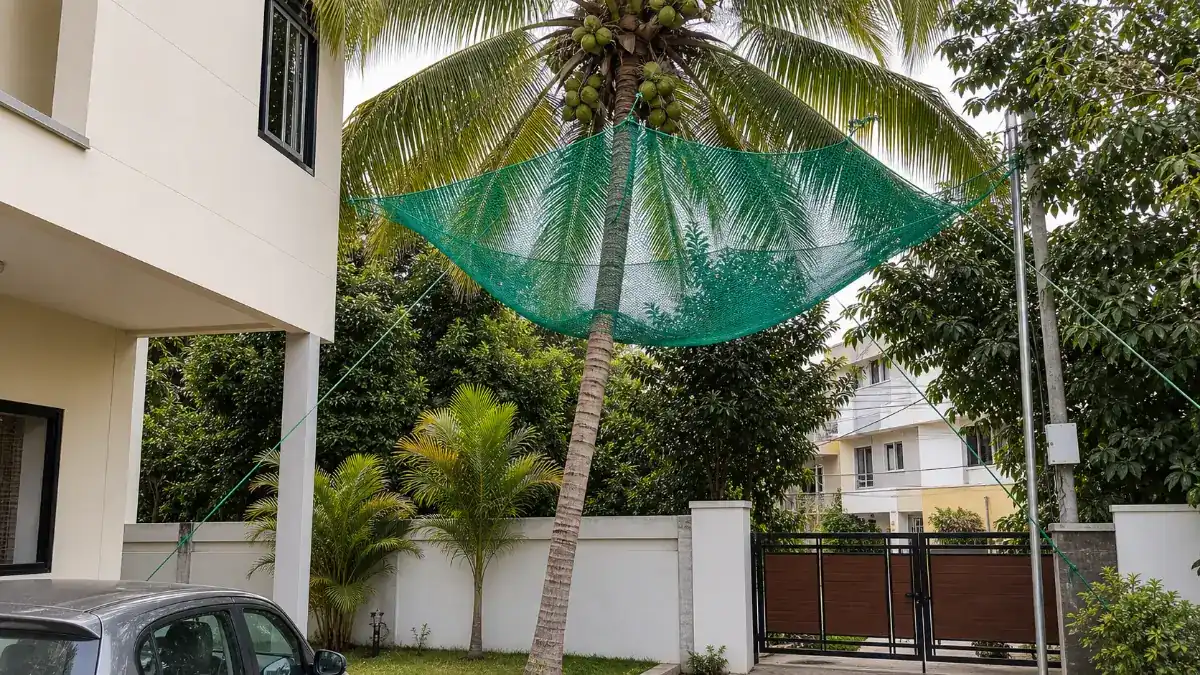
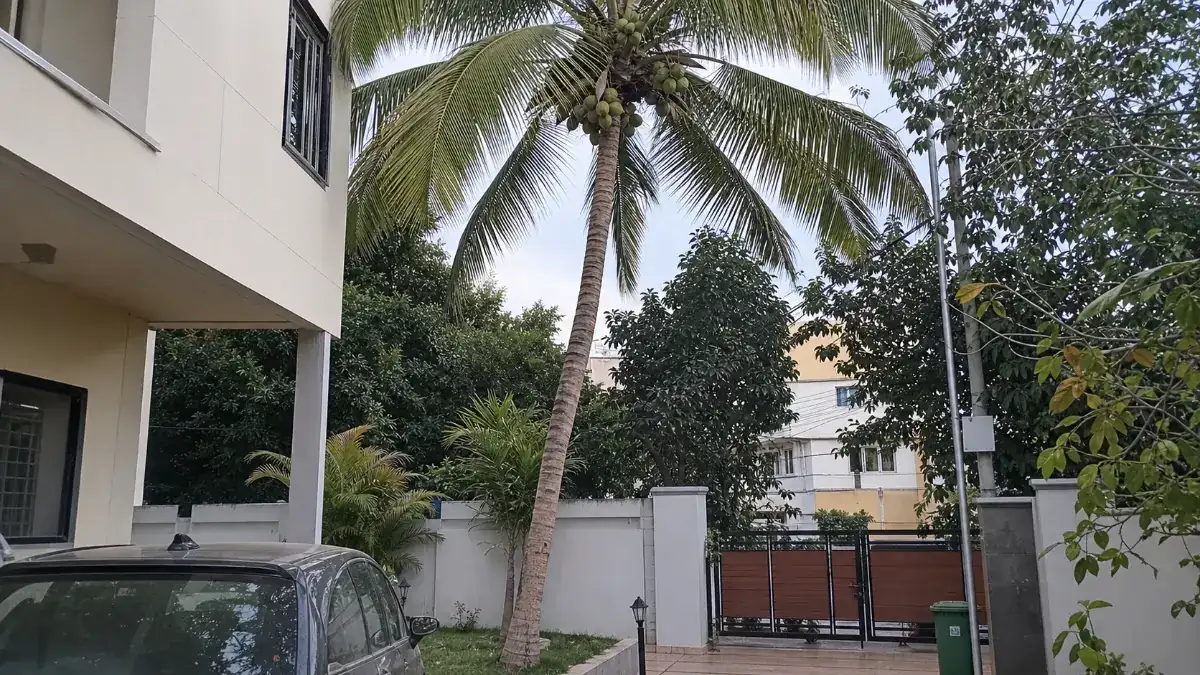
A villa owner may call because one coconut tree stands between the compound wall and the parking side. The tree looks healthy, but coconut bunches hang above a car and the family does not want to remove the tree. In that case, we first check the angle of the trunk, the crown spread, vehicle location and whether rope support can be taken to a nearby wall, pole or suitable tie point.
If the site allows it, a green coconut tree safety net can be fitted below the bunch area with border rope and side support. The aim is to reduce the chance of a coconut dropping directly into the parking area. We still explain that the tree should be checked regularly and collected material should be removed safely, because any net performs better when it is maintained.
Coconut Tree Safety Nets Across Hyderabad
We provide coconut tree safety net inspection and installation across Hyderabad for villas, apartments, compounds, schools, resorts, farmhouses and commercial outdoor areas.
ManikondaGachibowliKondapurMadhapurHitech CityKukatpallyMiyapurNizampetBanjara HillsJubilee HillsTellapurNallagandlaFinancial DistrictKokapetAttapurLB NagarUppalSecunderabad
Project Image Gallery
Maintenance Tips
- Check the net after strong wind or heavy rain
- Remove collected coconuts or dry fronds safely
- Inspect rope support and tie points occasionally
- Repair cuts, sagging or loose areas early
- Continue regular tree care and harvesting when needed
Warranty, Service Support and Safety Note
Warranty or service support depends on material type, fixing method, tree condition and installation area. We explain applicable support terms before work starts. Damage caused by cutting, construction work, fire, misuse, extreme weather, falling heavy branches or external impact is not covered unless specifically agreed.
Safety nets reduce risk from falling coconuts, loose fronds and outdoor fall zones, but performance depends on material selection, support strength, tree condition, wind and maintenance. Regular tree inspection and safe removal of collected material remain important.
Related Safety Net Services
FAQs About Coconut Tree Safety Nets
QAre coconut tree safety nets useful for homes and apartments?
Yes. They are useful where coconut trees stand near homes, apartment parking, walkways, gardens, compound walls, roofs or vehicle areas. They reduce risk when the correct material, coverage and support method are used.
QCan a safety net guarantee that every coconut will be stopped?
No. A safety net reduces risk, but performance depends on tree height, coconut bunch position, net strength, fixing points, wind, maintenance and tree condition. It should be used with sensible tree care.
QWhich material is used for coconut tree safety nets?
Green HDPE, nylon and UV-stabilized nets are commonly used. The right option depends on sunlight exposure, expected load, support rope, coverage area and how the net can be fixed around the tree.
QCan you install coconut safety nets near parking areas?
Yes. We inspect the tree, parking position, vehicle movement and access before suggesting net coverage. The aim is to reduce falling coconut risk without blocking daily parking use more than needed.
QHow do you calculate coconut tree safety net price?
Price depends on tree height, crown spread, coconut bunch position, net size, material, support rope, fixing method, access difficulty and site condition. Photos help with initial guidance.
QDo you provide coconut tree safety nets near me in Hyderabad?
Yes. SJ Invisible Grill provides coconut tree safety net inspection and installation across Hyderabad and nearby areas based on schedule, location and site access.
QWill the net harm the coconut tree?
The net should be installed with practical support and sensible tying, without unnecessarily cutting or damaging healthy parts of the tree. The method depends on tree shape, access and bunch position.
QWhat details should I send for a quick quote?
Send full tree photos, close-up photos of coconut bunches, the area below the tree, approximate height, location and the main concern such as parking, walkway, roof, garden or compound safety.
Book Coconut Tree Safety Net Installation in Hyderabad
Reduce falling coconut and dry frond risk around parking areas, villas, apartment compounds, gardens and walkways with a neatly installed coconut tree safety net. Call or WhatsApp SJ Invisible Grill for inspection, material suggestion and price estimate.